
1 / 25
BEI Magazine Pre-Cover
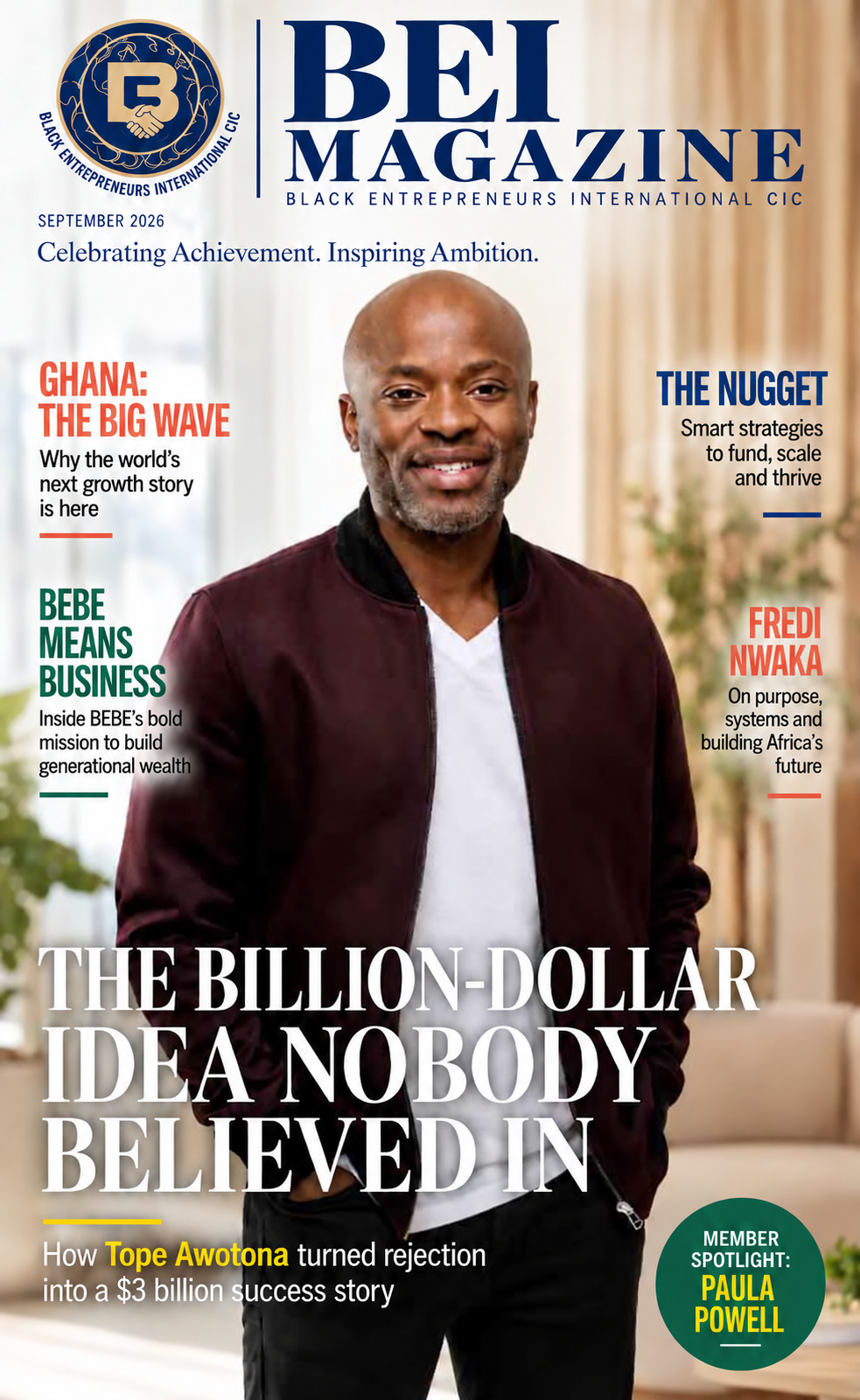
BEI Magazine September Cover — Tope Awotona
Editor's Letter
Publisher's Statement

Welcome to the September Issue

This edition carries stories that sit at both ends of the entrepreneurial journey — the euphoric and the sobering, often within the same industry, sometimes within the same year. Tope Awotona's rise from three failed startups to a billion-dollar company sits alongside the unfolding story of a Ghanaian fintech that once carried the same promise, now navigating a very different chapter. We've chosen to run both, deliberately, side by side.

That's a choice worth explaining. BEI Magazine exists to celebrate Black excellence in business — and it will always do that, unapologetically. But real excellence isn't served by only telling half the story. The entrepreneurs we most admire are the ones who understand risk honestly: who study failure as closely as success, and who know that the difference between the two is often a single decision, made under pressure, that either holds the line or doesn't. We owe our readers that same honesty.

Elsewhere in this issue, we shine a light on Ghana's entrepreneurial engine room — the founders building real businesses in agriculture, real estate and payments, often far from any headline. And we celebrate Fredi Nwaka, whose path from the streets of South London to the screen proves, again, that reinvention is always available to those willing to work for it.

As ever, Black Entrepreneurs International continues to build the community this magazine reports on — and we're proud to support their UK Black Business Show at Excel London this October. If you're building something, go and stand in that room.

Thank you for reading.
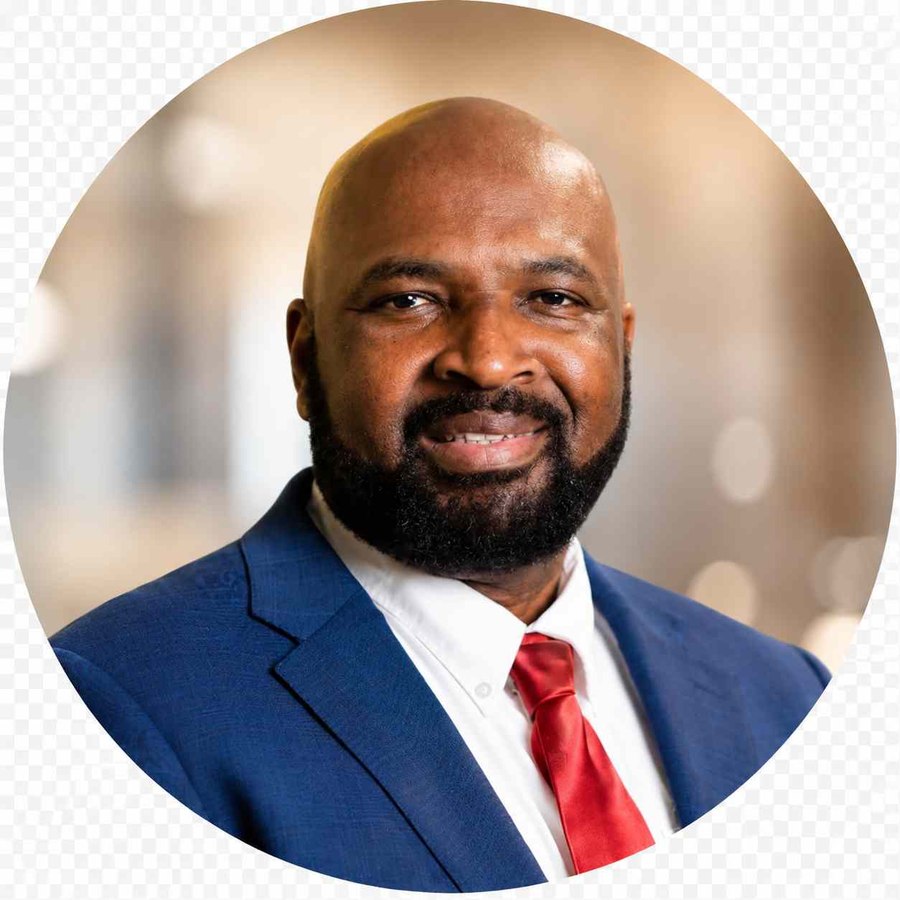
Basil Arrindell

Founder & CEO, DIM Publishing Group Ltd · Publisher, BEI Magazine

Leadership
A Letter from Our Co-Founder

Building The Room We Wished Existed

Mark is also the Co-Founder of Black Entrepreneurs International CIC, alongside Caroline Fagbemi. Together, they are building an organisation focused on empowering and supporting Black entrepreneurs across the UK, Africa and the wider diaspora — creating opportunities for networking, collaboration, visibility, growth and success.

When we started Black Entrepreneurs International, the idea was simple: build the room we wished had existed for us. A place where Black business owners — across the UK, across Africa, across the Caribbean, across North America — could stop introducing themselves from scratch every time, and start building on what's already there.

Three years on, that community numbers over 700 members strong on our WhatsApp group alone. This magazine is one more wall of it.

This issue asks something of its readers that I think matters. It celebrates Tope Awotona's extraordinary rise — proof of what's possible when you refuse to accept someone else's ceiling as your own. But it also sits with a harder story out of Ghana's fintech sector, because I don't think we do our community any favours by only ever showing the wins. Real entrepreneurship includes the moments that go wrong, and the discipline it takes to make sure yours doesn't. That honesty is exactly what BEI was built to hold space for.

I'm proud, too, that this issue introduces Curtis Goring's new column, The Nugget — real finance guidance, every issue, from someone who's spent his career on the right side of the lending table for businesses like ours. This is what BEI looks like in practice: members supporting members, expertise flowing freely, no gatekeeping.

If you're building something — whatever stage you're at — come find us at the UK Black Business Show this October at Excel London. Exhibit with us. Walk the floor. Meet the people in these pages in person.

We built this network to grow. Let's keep growing it, together.

Mark Dalgety

Co-Founder & CEO, Black Entrepreneurs International CIC

Black Entrepreneurs International
September Issue

In This Issue

  • Publisher's Statement03
  • A Letter from Our Co-Founder — Mark Dalgety04
  • Cover Story — Tope Awotona06
  • Ghana Spotlight — The Big Wave07
  • Special Report — The Rise & Reckoning of Zeepay09
  • The Blueprint — Fredi Nwaka10
  • Member Spotlight — Paula Powell, Sphere Hospitality11
  • Member Spotlight — Shirley White, OTC Beverages12
  • The Nugget — Curtis Goring13
  • Bebe Means Business — Bebe Clement14
  • Business Masterclass — How Business Really Works15
  • The Reading List — Books, Podcasts & Tools21
  • BEI News, Opportunities & Events22
  • Advertise With BEI Magazine23
Cover Story
Cover Story
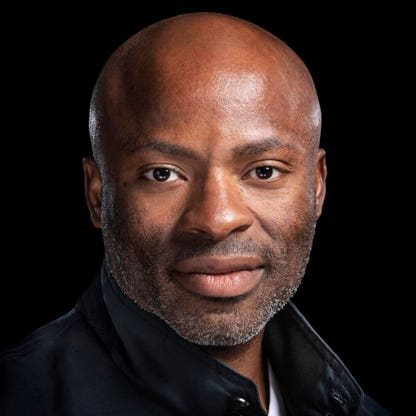
Tope Awotona

Tope Awotona

The Billion-Dollar Idea Nobody Believed In

$3B
Calendly Valuation
3
Failed Startups First
$1.4B
Net Worth, Forbes 2025

Tope Awotona was twelve years old when he watched his father, a microbiologist and entrepreneur, get shot and killed in a carjacking in Lagos. Three years later his family moved to Atlanta, a city he'd later describe as reminding him of Lagos — big, chaotic, full of traffic. He studied computer science and management information systems at the University of Georgia, then went into software sales for companies including EMC and Dell.

He also kept starting businesses on the side. A dating site. A projector e-commerce store. A grill sales venture. All three failed. "I was chasing money instead of solving real problems," he later admitted. It took a fourth attempt — one born from his own daily frustration with the endless back-and-forth of scheduling meetings by email — to finally work.

"I raided my bank account and 401(k) to launch Calendly in 2013. Eventually, I ran out of money and started to seek VC funding. I had a working product, and customers using it, and everyone said no."

— Tope Awotona

He drained his savings and his 401(k) — roughly $200,000 in total — to build Calendly, then watched investor after investor pass. "I watched other people who fit a different 'profile' get money thrown at them for shitty ideas," he told media at the time. "Those VCs were ignorant and shortsighted. The only thing I could attribute it to was that I was Black."

Calendly survived on bootstrapped growth for years before taking outside investment at all. When it finally did — a $350 million round in 2021 — it valued the company at $3 billion. Today Calendly serves over 20 million users worldwide, and Awotona is one of only two Black tech billionaires in the United States by Forbes' count.

His advice to other founders has remained consistent: "Your background is what you make of it. It can be an asset or an excuse." He's since become a fixture in Atlanta's Buckhead neighbourhood, alongside fellow entrepreneurs Sara Blakely and Ben Chestnut — proof, he says, that the standards he refused to lower were the right ones all along.

Global Spotlight
Global Spotlight

Ghana:
The Big Wave

Why investors and entrepreneurs are turning their attention to West Africa's rising star.

Business leaders reviewing Ghana on a map, Accra skyline
6%
Economic Growth, 2025
6.4%
Growth, Q1 2026
4.6%
Inflation, July 2026

Ghana is not simply recovering. It is gathering momentum. After navigating inflation, currency instability and economic uncertainty, this ambitious West African nation is attracting renewed attention from entrepreneurs, investors and the global African diaspora. The message is becoming increasingly clear: something significant is happening in Ghana.

Where The Opportunities Are

Agriculture & Food Production

Ghana produces world-renowned cocoa, but the bigger opportunity lies beyond farming: processing, packaging, distribution and building African-owned brands that capture more of the value.

Technology & Digital Finance

Mobile payments are transforming everyday business, creating opportunities in financial technology, cybersecurity, digital accounting and cross-border transfers.

Property & Infrastructure

From affordable housing and commercial developments to warehouses and hospitality, Ghana's growing urban economy needs well-planned spaces that meet real demand.

Renewable Energy

Expanding businesses require dependable electricity. Solar power, battery storage and energy-efficient solutions offer growing opportunities for investors and entrepreneurs.

Tourism & The Diaspora

Ghana's cultural heritage and deep connections to the African diaspora continue to fuel demand for hotels, restaurants, guided experiences, events and property services.

Ghanaian entrepreneurs with cocoa produce

Beyond the raw crop: Ghana's opportunity lies in processing, packaging and building African-owned brands around cocoa and produce.

Global Spotlight
Global Spotlight, Continued

More Than One Market

Young Ghanaian entrepreneurs collaborating

Ghana's population is young, ambitious and increasingly connected.

More than a third of Ghanaians are aged between 15 and 35, representing a new generation of consumers, employees, founders and innovators. Accra also hosts the secretariat of the African Continental Free Trade Area, positioning Ghana at the heart of an initiative intended to connect a continental market of approximately 1.3 billion people. For investors, that changes the conversation. Ghana is not simply a destination. It could be a gateway.

No serious investment comes without risk. Currency fluctuations, property ownership disputes, regulation and access to finance all require careful consideration. Strong local partnerships, proper research and professional advice are essential.

But for entrepreneurs prepared to do their homework, Ghana offers something increasingly difficult to ignore: a growing economy, genuine commercial demand and a generation ready to build. For Black entrepreneurs across Britain, Africa and the wider diaspora, the opportunity extends beyond investment. It is about partnership, enterprise and helping create wealth that remains within the communities generating it.

The wave is building. The question is: who's ready to ride it?

Ones To Watch: Ghana's Rising Businesses

Agro Kings

Founder Nana Owusu-Achau left a Wall Street career after a chief handed him a bag of smallholder-grown rice in 2017. Today Agro Kings is Ghana's second-largest rice producer, working with roughly 5,000 smallholder farmers.

Devtraco Plus

Carved out of a real estate group that began as a block factory in 1993, Devtraco Plus is now Accra's defining luxury developer, expanding into Liberia.

Hubtel

Started by three university classmates in 2005, Hubtel is now Ghana's largest fintech by transaction volume — entirely self-funded.

Special Report
Special Report
Ongoing · Unresolved

The Rise & Reckoning
of Zeepay

A Ghana fintech story, still being written.

Zeepay app
Watch: TV News Report

For a decade, Zeepay was one of Ghana's proudest fintech exports. Founded in 2014 by Andrew Takyi-Appiah, a banker with stints at Barclays and WorldRemit behind him, the company bet on a simple but powerful idea: that Africa's mobile money wallets, not its bank accounts, were the fastest route for diaspora cash to reach home. It worked. Zeepay grew into a cross-border remittance platform spanning more than 20 African markets, raised over $26 million from investors, partnered with MTN, Vodafone and AirtelTigo, and positioned itself as one of the continent's most recognisable payments brands.

Then, this year, it began to unravel.

The Breach

On 14 July 2026, the Bank of Ghana revoked Zeepay's Dedicated Electronic Money Issuer licence with immediate effect. The central bank's finding was stark: Zeepay had been issuing electronic money without holding the cash reserves required to back it — a "negative variance" that left customer, agent and merchant wallets exposed. Regulators said the company had ignored repeated directives to inject capital and wind the business down safely.

The Personal Reckoning

The licence revocation didn't arrive in isolation. Three months earlier, in April 2026, Ghana's High Court ordered Zeepay and Takyi-Appiah personally to repay more than $11.6 million to a businessman whose remittance funds were never forwarded — funds the court found had partly landed in the CEO's own personal mobile money wallet. That judgment is now under appeal.

Apr 2026
High Court orders Zeepay and CEO Andrew Takyi-Appiah to personally repay $11.6M; ruling now under appeal.
14 Jul 2026
Bank of Ghana revokes Zeepay's DEMI licence over unbacked digital wallet balances.
17 Jul 2026
Registrar General secures ex-parte court order to wind up and liquidate Zeepay.
31 Jul 2026
Same court quashes its own liquidation order for lack of jurisdiction — Zeepay continues operating.
Ongoing
Separate $1.22M winding-up petition from creditor Obsidian Achernar Ltd remains pending.
The Lesson for Founders

Strip away the legal complexity, and the throughline is simple: the line between a founder's personal finances and their company's finances is not a technicality — it is the foundation everything else stands on. Zeepay didn't fail because the idea was wrong. It's a reminder that trust, once extended by regulators, customers and investors, is the one asset that compounds slower than any other — and disappears the fastest.

The Blueprint
The Blueprint
Fredi Nwaka

Fredi Nwaka

From the Streets of Brixton to the Screen

South London born, the second youngest of six children to Angela and Francis Nwaka, Fredi Nwaka spent his teenage years moving between the backstreets of Brixton and the plush surroundings of Chelsea's King's Road — a duality that would come to define his career. As a teenager he became a member of one of South London's biggest gangs, the Untouchables. He also MC'd on numerous sound systems, earning the name "Fredi Kruga" through a combination of neighbourhood reputation and skill on the mic.

He built a genuine music career under that name, winning numerous awards and becoming the only UK artist ever affiliated and signed to the American hip hop powerhouse Wu-Tang Clan, opening up shows for artists like the late DMX and H Town, just to name a couple.

Before any of that, he worked close protection for some of music's biggest names, including Biggie Smalls, TLC and Donell Jones, and was part of Choice FM's security outfit.

"I like to see myself as a triple threat. I write, direct and produce, and have produced seven shorts and five feature films to date."

— Fredi Nwaka

Fredi Nwaka

The pivot into film came next, and it stuck. Nwaka acted alongside Curtis "50 Cent" Jackson in the UK gangster film Dead Man Running, and later appeared in Sky's Bullet Proof alongside Ashley Walters and Noel Clarke. He went on to star in numerous other films such as The Intent, The Last Heist, War Of The Worlds, She's The One and Brotherhood. But it's behind the camera where his reinvention is most visible — self-taught, he has written, directed and produced numerous short films and five feature films, founding Are We Dead Yet Ltd and Nwaka Studios to produce film and TV content. His last film, Jafaican, starring Peter Andre, Sizzla Kalonji, Wil Johnson and Oliver Samuels, became the most talked-about comedy of 2025 and has gone on to receive five nominations in this year's 2026 Caribbean Film Awards, taking place this October, including Best Director and Best Caribbean Film.

He is also the CEO and founder of H.E.A.L Daily CIC, an organisation which works closely with young people who may be at risk of youth violence or suffering from mental health difficulties. He is the founder of the Power Of A Man Awards and the Power Of A Woman Awards, which celebrate inspirational men and women of colour.

Fredi Nwaka

Nwaka is also a published author. His bestselling book BOY is a bestseller in three categories on Amazon, and he has gone on to produce a podcast of the same name, interviewing men about their childhood experiences. His story — road man to recording artist to filmmaker to founder — is exactly the kind of reinvention BEI Magazine exists to put on record.

fredinwaka.com · Power Of A Man Awards · Power Of A Woman Awards
IMDb · LinkedIn · Instagram @therealfredinwaka

Women in Business
Member Spotlight · Women in Business
Paula Powell

Paula Powell

Founder, Sphere Hospitality Events

Sphere Hospitality Events began in 2008 with an idea born somewhere its founder never expected to find one: in church, listening to a sermon by Bishop Malcolm titled "Sphere." Paula Powell took the name, and the concept, and built a hospitality business around it that would go on to serve some of the most high-profile guests to ever visit the UK.

The company's first major project set the tone for everything that followed — providing hospitality services for American church leader Pastor Connie Brooks, who brought a delegation of 100 women to the UK. Word travelled fast. Paula quickly became the go-to name for hospitality services supporting pastors and their wives, and gospel artists appearing at events across Britain.

From there, Sphere Hospitality's client list grew to include Juanita Bynum, Tasha Cobbs, Dare 2 Dream, and the Destined to Soar Women's Ministry Breakfast — alongside major mainstream events including BBC Weekender Screen Nation, the NTA Awards, the MOBO Awards, the BRIT Awards, and hospitality operations at the London 2012 Olympics and Jamaica House 2012.

Sphere Hospitality's biggest achievement to date was looking after Michelle Obama during her UK book tour — a defining moment that catapulted the company to a new level of visibility, event management and service.

Paula Powell with Michelle Obama

Paula Powell with Michelle Obama during her UK "Becoming" book tour.

From a single sermon to hosting a former First Lady of the United States, Paula Powell's journey is a reminder that the biggest opportunities often arrive disguised as the smallest ones — and that showing up with excellence, every single time, is what turns a first booking into a seventeen-year career.

Member Spotlight
Member Spotlight

Shirley White

From the City to the Caribbean

Shirley White, founder of OTC Beverages

Shirley White, founder of OTC Beverages — Original Traditional Concoctions.

It began at a birthday party. In 2017, Shirley White gathered with family to celebrate her father's 80th birthday. Surrounded by familiar faces, traditional food and homemade Caribbean drinks, she found herself thinking about something more profound than the occasion itself: the generation that had brought these flavours and traditions to Britain was getting older. What would happen when they were gone?

For Shirley, whose father came from Montserrat and whose mother was Jamaican, the answer was clear: those traditions deserved to survive. OTC Beverages was born.

After years working in banking and finance, Shirley entered an entirely unfamiliar world — manufacturing, packaging and selling premium non-alcoholic drinks. She started with flavours close to her heart, traditional ginger beer and sorrel, before introducing butterfly pea flower and lime. Her ambition was straightforward: take the drinks Caribbean families had enjoyed for generations and present them with the quality, confidence and visual appeal they deserved.

Even the name carries personal meaning. OTC stands for Original Traditional Concoctions, nods to Shirley's background in financial trading, and reflects the names of her sons, Omari and Tyrone, and her nephew Corey. Family, heritage and enterprise — all in three letters.

Starting a drinks company is challenging enough. Shirley's journey became even harder when the pandemic disrupted hospitality businesses and closed important routes to market. But OTC survived — continuing to develop its products, attracting independent retailers, and earning industry recognition, including being named Traditional Caribbean Drink Company of the Year, London, in 2023.

For Shirley, the achievement extends beyond awards or attractive packaging. It represents the preservation of flavours, stories and memories that might otherwise disappear. Her message to other founders: you do not always need to invent something new to build a meaningful business. Sometimes the opportunity lies in recognising the value of what your family and community have already created — and finding a way to share it with the world.

OTC Beverages
Watch: Shirley on OTC Beverages
The Nugget
Regular Column · Finance & Funding

The
Nugget

Every issue, a useful nugget worth sharing — from someone who's sat on both sides of the lending table.

Curtis Goring

Curtis Goring

Managing Director, Commercial Finance Professional & Business Authority, The Aftersales Network

Every issue, BEI Magazine hands the page over to Curtis Goring — Managing Director of The Aftersales Network Limited, a UK-based commercial finance brokerage and business advisory firm, and a finance broker who's spent his career on the front line of SME lending.

The Aftersales Network structures business loans, property finance and cashflow solutions for small and medium-sized enterprises, and Curtis has built a reputation for sharing what most brokers keep to themselves: what lenders are actually looking for, how to structure debt sensibly, and how to manage risk before it becomes a crisis. Each issue, The Nugget hands readers one practical, shareable piece of finance wisdom straight from him — backed by video.

This Month's Nugget

“Don’t wait for Q4 to tell you what you should have prepared for in September. Decide what matters, find the cash before you need it, and remove the roadblocks while you still have time to do something about them.”

— CURTIS GORING, MANAGING DIRECTOR, THE AFTERSALES NETWORK

Bebe Means Business
Regular Column · Business & Leadership

Bebe Means
Business

Every issue, wealth-building wisdom and leadership insight from an award-winning author and international speaker.

Bebe Clement

Bebe Clement

Employment Lawyer, Entrepreneur & Business Mentor

From Employee to Entrepreneur: Building Wealth Beyond Your Salary

A regular salary provides security — but does it provide financial freedom? For BEI member Bebe Clement, that question became personal following the loss of her mother, an entrepreneur whose passing left the family facing financial difficulties despite her father's professional career.

The experience shaped Bebe's belief that depending entirely on one income can leave even hardworking families vulnerable. Today, as an employment lawyer, entrepreneur, business mentor and author of How to Go From Employee to Entrepreneur, she encourages others to take greater ownership of their financial futures. Here are five principles aspiring entrepreneurs should consider.

1. Start With What You Already Know

You do not need a revolutionary idea. Your professional and personal experience, practical skills and natural giftings or talents could form the foundation of a viable business.

2. Do Not Rush To Quit Your Job

Employment can provide stability while you test your idea, attract your first customers and understand your market. Most new businesses generally do not turn a profit for at least the first couple of years, so make sure you have a transition plan — not just around money, but family commitments too, which if not catered for can become a hindrance to the business.

▶ Watch
Bebe Clement — In Her Own Words
Tap to play

3. Solve A Real Problem

A business succeeds because people are willing to pay for the solution it provides to a problem they have. Focus on customer needs rather than simply creating something you personally find interesting.

4. Develop Additional Income Intelligently

Multiple income streams can strengthen financial security, but only if they are sustainable. Concentrate on building one dependable venture before spreading yourself too thinly, and invest in industries that you understand.

5. Success Leaves Clues

Invest in knowledge, and build a solid network of purpose-driven, quality people. Seek guidance, find mentors and learn from people who have already made the journey. The right advice can prevent expensive mistakes — and a rising tide lifts all boats. Just being around successful people can stimulate you and accelerate your progress.

Your salary may pay the bills, but your skills, ideas and initiative could open the door to something much bigger.

— BEBE CLEMENT, EMPLOYMENT LAWYER, ENTREPRENEUR & BUSINESS MENTOR

Bebe Clement is a BEI member, entrepreneur, business mentor and author. All Bebe Clement books and products, and upcoming speaking engagements, are available on her website.
bebeclement.com · Instagram @bebeclement · X @bebe_clement · LinkedIn Bebe Clement

Masterclass
Business Masterclass

How Business
Really Works

The unwritten rules, costly traps and practical moves that every entrepreneur should understand.

Entrepreneur reviewing business numbers

You can have a brilliant idea, an impressive website and complete belief in your product — and still struggle to build a successful business. Why? Because business is not won by enthusiasm alone. It is a game of numbers, positioning, relationships, consistency and informed decisions. The entrepreneurs who progress are not necessarily the most talented. They are usually the ones who understand what matters, protect their resources and keep making intelligent moves.

Here is the roadmap nobody gives you at the beginning.

BEI MAGAZINE EDITORIAL TEAM
Masterclass
Learn The Game Before The Game Costs You

1. Revenue Is Vanity. Cash Is Survival.

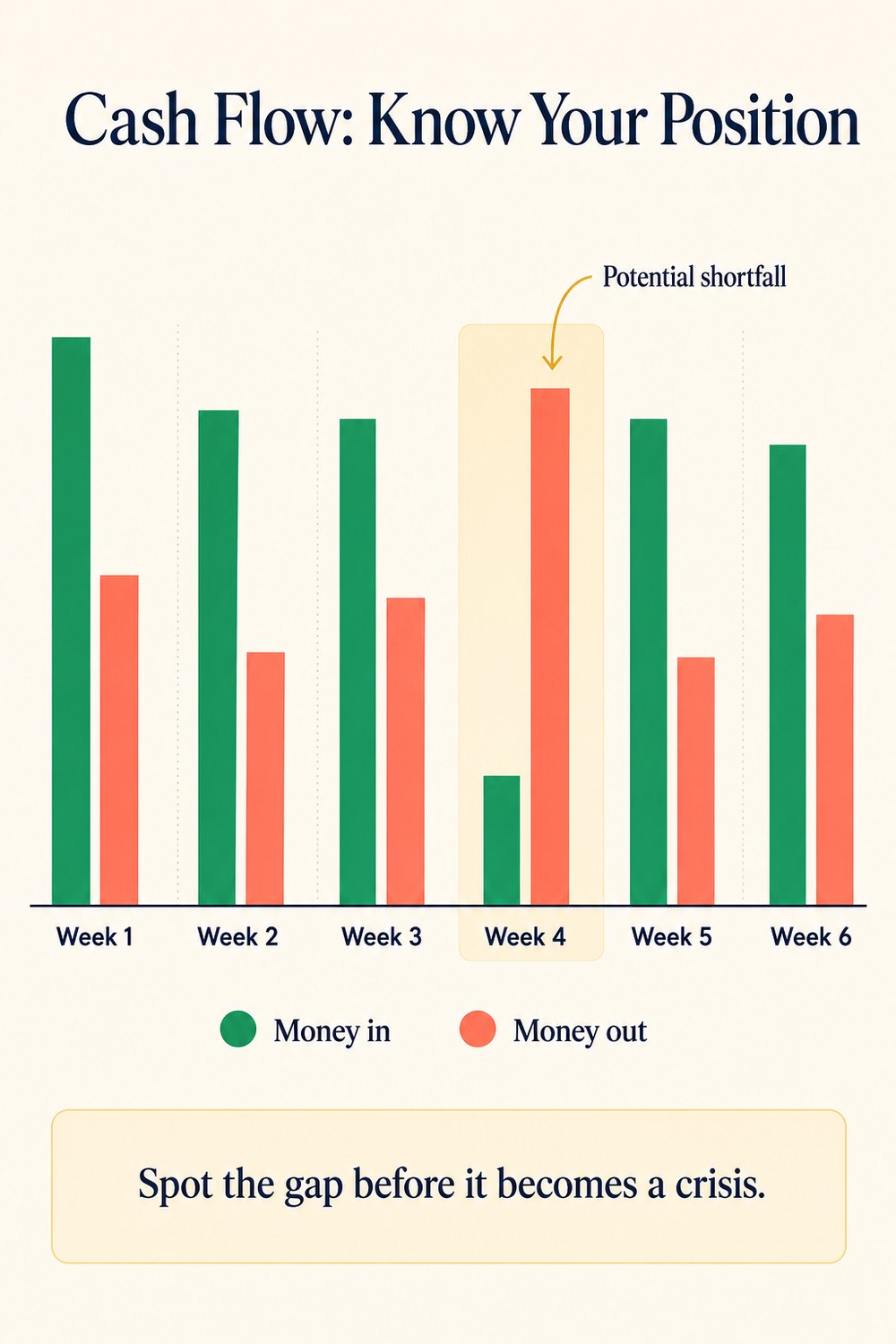
A business can appear successful and still run out of money. Sales recorded on an invoice are not cash in the bank. A £10,000 contract means little if payment takes 90 days while salaries, suppliers and rent are due now.

Know these numbers at all times: cash currently available, monthly operating costs, money owed to you, payments due within 30 days, minimum sales needed to break even, and how long the business can survive without another sale.

Cash flow chart — know your position

THE MOVE: Prepare a simple 13-week cash-flow forecast. Update it every Monday. It will reveal problems while you still have time to solve them.

GOLDEN RULE: Profit is the objective. Cash flow is the oxygen.

2. Solve A Costly Problem

Customers do not buy products simply because they are impressive. They buy outcomes. Your offer must do at least one of the following: make money, save money, save time, reduce risk, remove frustration, or improve status, comfort or confidence. If your potential customer cannot quickly understand the benefit, the problem is rarely their attention span. The offer probably needs greater clarity.

THE MOVE: Complete this sentence without jargon: "We help [specific customer] achieve [specific result] without [major frustration]." If that sentence is difficult to complete, your positioning is not yet clear enough.

Masterclass
Learn The Game, Continued

3. Price The Value — Not Your Insecurity

Many new businesses calculate a price and then reduce it because they fear hearing "no." But being the cheapest is not a strategy unless you have the scale and systems to remain profitable at that price. Low prices can attract demanding customers, create cash-flow pressure and leave no room to improve your service. Constant discounting also teaches customers to question your real value.

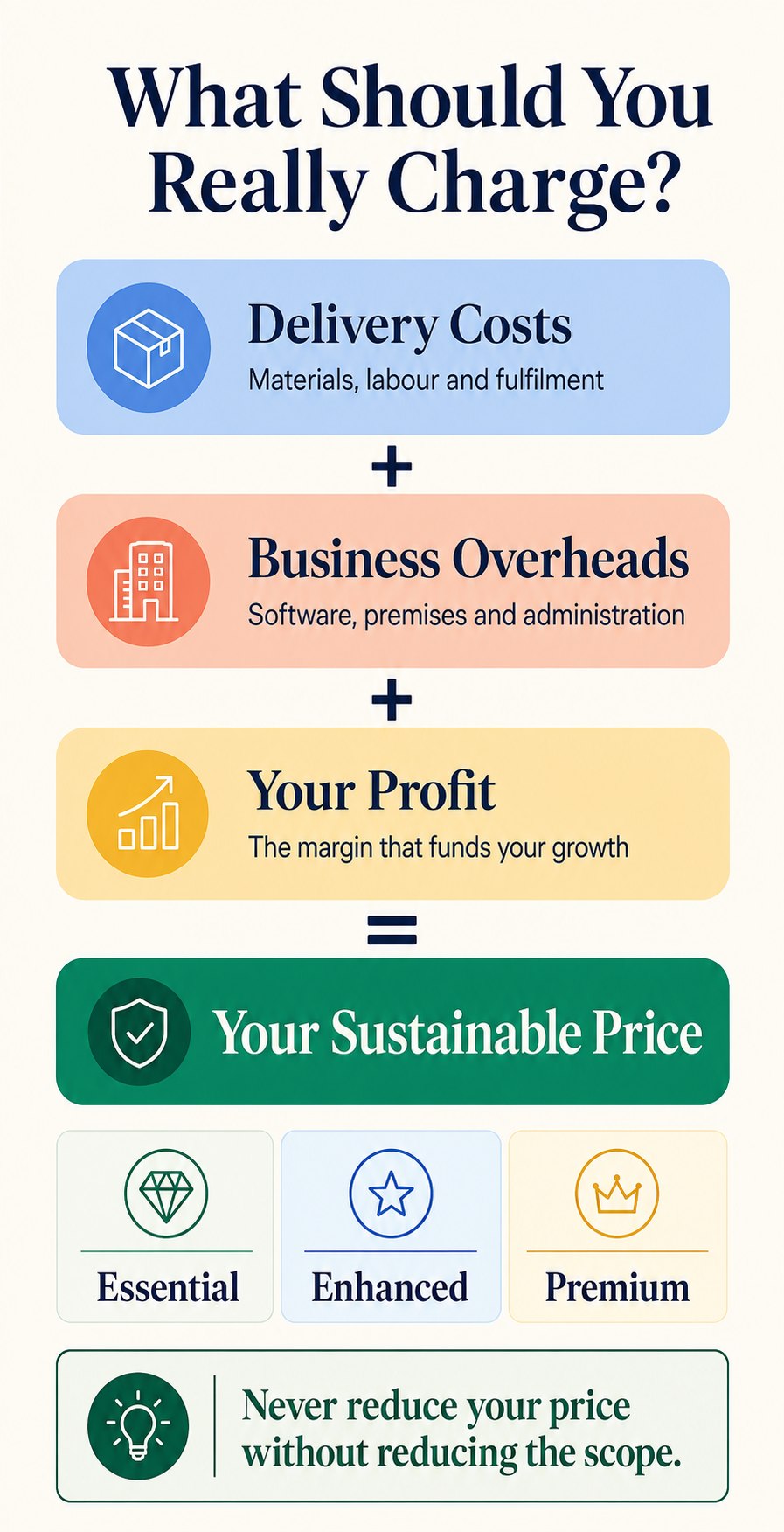
What should you really charge — pricing formula

THE MOVE: Build every price from four elements — the cost of delivering the work, your operating overheads, the profit required to grow, and the value of the result to the customer. Offer three choices: Essential, Enhanced and Premium.

GOLDEN RULE: Never reduce a price without reducing the scope.

4. Sell Before You Perfect

Entrepreneurs can spend months adjusting logos, websites, presentations and product details while avoiding the most important test: will anybody pay? A real customer provides more useful information than a room full of opinions.

THE MOVE: Create the smallest credible version of the offer. Put it in front of ten carefully chosen prospects. Ask for a commitment — not simply feedback.

Masterclass
Learn The Game, Continued

5. Protect The Business Early

Excitement encourages speed. Business requires clarity. Friendships, family relationships and verbal promises are not substitutes for written agreements. In fact, the closer the relationship, the more important clarity becomes.

Put the following in writing: who owns what, who is responsible for what, how money will be divided, what happens when somebody leaves, who owns the intellectual property, when and how payment must be made, and what happens if expectations are not met.

GOLDEN RULE: A good agreement does not demonstrate mistrust. It prevents different memories later.

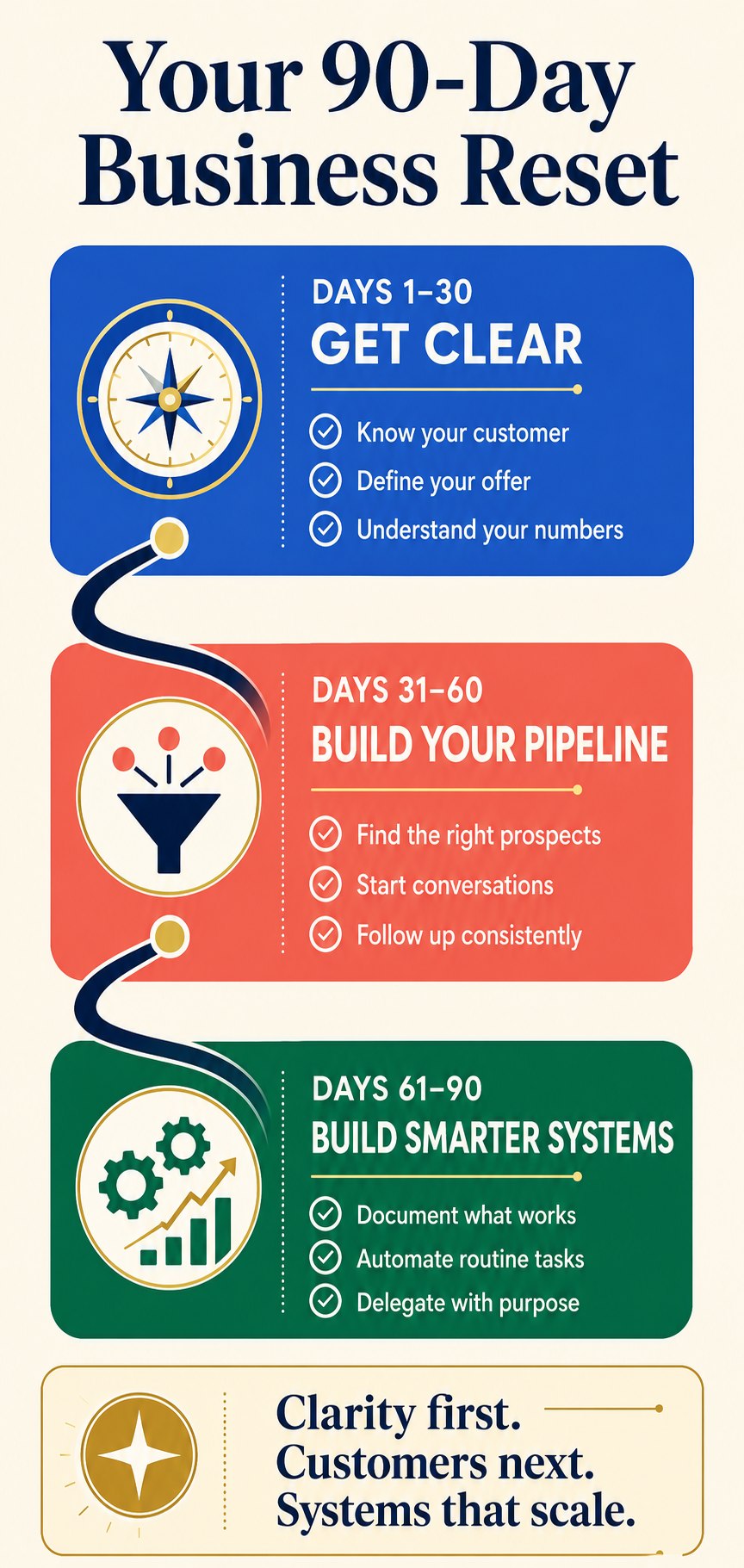
The 90-Day Business Reset

A practical plan for turning activity into progress.

Your 90-Day Business Reset
Masterclass
The 90-Day Business Reset

Days 1–30: Get Clear

Define your most valuable customer — "everyone" is not a target market. Identify your flagship offer — one that is easy to explain, profitable to deliver and capable of producing a meaningful result. Know your numbers: break-even point, profit margin, monthly overheads, average customer value and available cash runway. Review where your time goes, and remove work that can be automated, delegated or stopped.

YOUR 30-DAY TEST: Can you explain what you sell, who it is for, why it matters and what it costs in under 30 seconds?

Days 31–60: Build The Pipeline

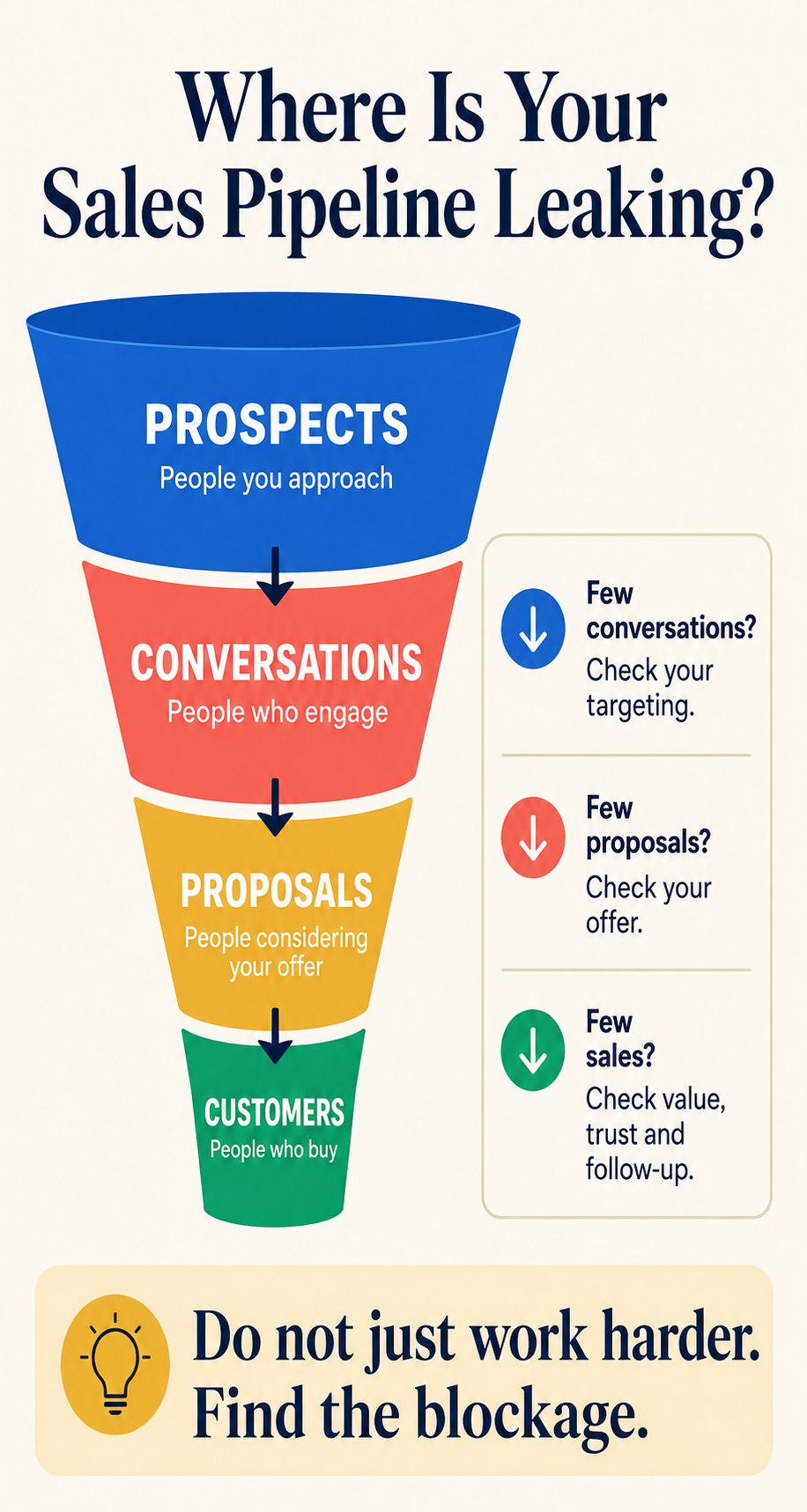
Random marketing creates random results. Choose one primary audience, one core message, one main route to reach them, and one clear next action. Track five numbers: new prospects approached, conversations started, proposals issued, sales completed, and average sale value.

Where is your sales pipeline leaking

THE REALITY: No conversations? Your targeting or outreach is wrong. Plenty of conversations but no proposals? Your offer may lack urgency or relevance. Many proposals but few sales? Examine trust, value, price or follow-up. Do not simply "try harder." Diagnose the blockage.

Masterclass
The 90-Day Business Reset, Continued

Days 61–90: Create Leverage

Growth should not mean that the owner becomes more exhausted every month. Turn repeated work into a system: document how important tasks are completed, create templates for common communications, automate reminders and routine follow-ups, delegate outcomes rather than isolated chores, and review which products, services and customers generate the strongest margins.

Before hiring, ask: "Is this genuinely a new role, or is it disorganisation wearing a job description?" Hire when the work is repeatable, the outcome is measurable, and the business can carry the true cost — not merely the salary.

The Rules Worth Remembering

Never depend on one customer for the survival of your business. Never confuse a busy diary with a healthy company. Never enter an important partnership without agreeing how it can end. Never allow unpaid invoices to become an unofficial loan. Never hire permanently to solve a temporary problem. Never spend to impress people who are not buying. Never scale something that is not yet profitable or repeatable. Never ignore the customers you already have while chasing strangers. Never make a major decision using numbers you have not checked. Never allow pride to keep an unsuccessful idea alive indefinitely.

The Weekly CEO Hour

Set aside one uninterrupted hour every week to work on the business rather than inside it. Ask: What generated revenue this week? What consumed time without producing value? Which payment or decision requires immediate attention? Where is the greatest risk in the business today? What is the single most important move for next week? Write down the answers. Assign actions and deadlines. This simple habit can prevent months of drift.

Business is not a straight road, and nobody plays it perfectly. Stay close to your customers. Know your numbers. Protect your cash. Build genuine relationships. Put important agreements in writing. Make decisions from evidence rather than ego. A business does not grow because its owner is constantly busy. It grows because the right things are done — consistently, deliberately and well.

Free Download: The BEI Business Toolkit

Four practical tools to put this issue's advice into action. Download them all free and keep them close.

📥 The 13-Week Cash-Flow Planner 📥 The 90-Day Business Reset 📥 The Weekly CEO Hour 📥 The Pricing Calculator
BEI MAGAZINE EDITORIAL TEAM
The Reading List
Recommended

Books, Podcasts & Tools Worth Your Time

What the BEI Magazine team is reading, listening to, and using this month.

Books

The Purpose Economy → by Aaron Hurst — a sharp case for building businesses around meaning rather than margin alone, popular reading among BEI members scaling past their first hire.

Black Fortunes → by Shomari Wills — the true stories of America's first Black millionaires, essential context for anyone building wealth against historical headwinds.

Measure What Matters → by John Doerr — the OKR framework used by Google and countless growth-stage founders to keep ambitious teams aligned.

Podcasts

Black Tech Green Money → — hosted by Will Lucas, spotlighting Black entrepreneurs building in tech and beyond.

How I Built This → with Guy Raz — founder origin stories, including several featured entrepreneurs with journeys not unlike this issue's cover story.

My First Million → — sharp, occasionally irreverent business-idea breakdowns, useful for spotting where the next opportunity might sit.

Tools

Notion → — for founders juggling too many spinning plates; one workspace for planning, docs and light CRM.

Wise → — for anyone trading across currencies or paying international suppliers without punishing FX fees.

Canva → — still the fastest route from idea to presentable graphic when you don't have a design team on call.

BEI News
BEI News, Opportunities & Events
Black Entrepreneurs International

Join Us at the UK Black Business Show

ExCeL London
Excel London
Saturday 17th October

Showcase your business and connect with thousands. BEI will be exhibiting — and inviting fellow entrepreneurs to join us on the floor.

Black Entrepreneurs International (BEI) is joining and exhibiting at the UK Black Business Show at Excel London this October — a landmark gathering bringing together Black-owned businesses, buyers and industry leaders under one roof for a full day of networking opportunities and business workshops.

Whether you're an established business owner or just starting out, this is a chance to showcase what you're building to thousands of attendees in person. BEI members are encouraged to get in touch to secure their place on the exhibition floor.

The Founders' Vision

Mark is also the Co-Founder of Black Entrepreneurs International CIC, alongside Caroline Fagbemi. Together, they are building an organisation focused on empowering and supporting Black entrepreneurs across the UK, Africa and the wider diaspora — creating opportunities for networking, collaboration, visibility, growth and success.

Partner With Us
Advertise With BEI Magazine

Reach An Engaged, Growing Community

BEI Magazine reaches a community of over 700 engaged Black entrepreneurs and business owners across the UK, Africa, the Caribbean and North America — founders actively building, hiring, investing and looking for the tools, services and partners to help them scale.

If your brand serves entrepreneurs — finance, technology, professional services, education, lifestyle — this is a direct line to a readership that trusts this platform's recommendations.

Full Page Feature

A dedicated editorial-style page introducing your business to our full readership, designed to match the magazine's own visual standard.

Half Page Placement

A focused placement alongside relevant editorial content — ideal for services relevant to a specific department (finance, tech, wellbeing).

Member Offer Listing

A discount or exclusive offer listed directly to BEI's community — a lower-cost way to build direct relationships with engaged members.

Recurring Column

Like Curtis Goring's The Nugget or Bebe Clement's Bebe Means Business — a named, recurring column establishing your brand as a trusted voice, issue after issue.

To discuss rates and availability, contact sales@dimpublishing.com or call +44 203 002 0102.

This is only the beginning — BEI Magazine
Let's stay connected — BEI Magazine contact details